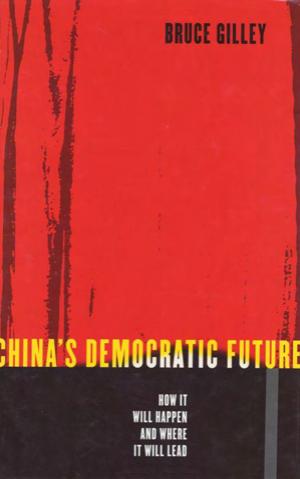
China's Democratic Future: How It Will Happen and Where It Will Lead by Bruce Gilley
Author:Bruce Gilley [Gilley, Bruce]
Language: eng
Format: epub, pdf
Tags: International Relations, Political Science, General
ISBN: 9780231130844
Google: T0Yvwq2eYTAC
Goodreads: 1348356
Publisher: Columbia University Press
Published: 2004-01-15T07:05:39+00:00
International Reaction
No less than fears of domestic unrest, the threat of national disunity has been repeatedly invoked in China as an argument against democratic reforms. It is an issue that will appear frequently in the consolidation phase. Early on, it can stall democratic reforms if interim leaders revert to arguments for a firm hand to preserve unity. In the USSR and Yugoslavia, the threat of breakaway republics held up reforms at critical moments.
Tibet and Xinjiang would be the most likely sources of secessionist sentiment in the immediate aftermath of a breakthrough, although Chinaâs hidden diversity counsels us to keep in mind the possibility of division elsewhere. As the USSR example showed, the very triumph of âlegalityâ and âconstitutionalismâ on which the interim governmentâs authority partly rests creates new openings for separatism. In Tibet and Xinjiang, the âhigh degree of autonomyâ promised to these regions under the countryâs laws will suddenly seem not just viable but also necessary.
Although Tibetâs spiritual leader, the Dalai Lama, has publicly ruled out independence and sought only greater autonomy for his homeland, younger and more fiery Tibetans, especially those in exile, might seek to lead a new uprising against Chinese colonial rule like that of 1959. In Xinjiang, where avowed independence movements operate across the border, oases along the border with limited Chinese influence like Hotan, Kashgar, and Gulja could be the source of similar movements. Such activity could provide ammunition for advocates of less than complete democratization in China.
The threat of immediate breakaway is less pronounced for democratic Taiwan since the island is already totally self-governing and would be well aware of the consternation it would cause in Asia and the West if it were seen as having exploited a fragile move toward democracy in Chinaâsomething it has long advocatedâfor its own ends. As above, it might also strengthen the hand of remnant conservatives in China. There would be little incentive for Taiwan to make a preemptive declaration of independence at this stage, especially given that the longer-term prospects of democracy in China would provide brighter hopes for its eventual peaceful achievement of this.
Indeed, there may be a role for Taiwanâs leaders in supporting the changes. In the USSR in 1991, Boris Yeltsin promised to support the secession of Baltic States to gain their support and thus win the upper hand over Gorbachev by portraying him as âantidemocratic.â A similar pact might be negotiated with Taiwan. A Taiwan leader could promise to support the reformers and not declare independence in return for a promise that the future Chinese state would recognize Taiwanâs autonomy and drop threats of war.
Certainly there are normative reasons to wish that breakaway movements do not erupt anywhere in China at this stage. But the âwindow of opportunityâ presented by the transition may be too tempting. Some leaders may see the possibility of a more nationalistic China in the early years of democracy and argue for an immediate dash for freedom. It would be critical for world leaders to make it clear that they would not, at this stage, support such division.
Download
China's Democratic Future: How It Will Happen and Where It Will Lead by Bruce Gilley.pdf
This site does not store any files on its server. We only index and link to content provided by other sites. Please contact the content providers to delete copyright contents if any and email us, we'll remove relevant links or contents immediately.
Personalized inhaled bacteriophage therapy for treatment of multidrug-resistant Pseudomonas aeruginosa in cystic fibrosis by unknow(214553)
CONSORT 2025 statement: updated guideline for reporting randomized trials by unknow(102521)
Critical evaluation of the ProfiLER-02 study design and outcomes by Vivek Subbiah & Razelle Kurzrock(102044)
Cardiac gene therapy makes a comeback by Oliver J. Müller & Susanne Hille & Anca Kliesow Remes(101838)
Whisky: Malt Whiskies of Scotland (Collins Little Books) by dominic roskrow(74619)
Unveiling the design rules for tunable emission in graphene quantum dots: A high-throughput TDDFT and machine learning perspective by Şener Özönder & Mustafa Coşkun Özdemir & Caner Ünlü(51002)
A yeast-based oral therapeutic delivers immune checkpoint inhibitors to reduce intestinal tumor burden by unknow(40374)
Covalent hitchhikers guide proteins to the nucleus by Alexander F. Russell & Madeline F. Currie & Champak Chatterjee(40296)
Meet the Authors: Christopher R. Mansfield and Emily R. Derbyshire by Christopher R. Mansfield & Emily R. Derbyshire(40206)
Alkaline-earth metals promote propane dehydrogenation with carbon dioxide through geometric effects: Altering the reaction pathway by unknow(32814)
Induced iron vacancies boosting FeOOH loaded on sustainable Fenton-like collagen fiber membrane for efficient removal of emerging contaminants by unknow(32610)
Efficient electric-field-assisted photochemical conversion of methane to n-propanol exclusively over penetrated TiO2Ti hollow fibers by Guanghui Feng(32529)
Bi2SiO5 nanosheets as piezo-photocatalyst for efficient degradation of 2,4-Dichlorophenol by Hangyu Shi & Yifu Li & Lishan Zhang & Guoguan Liu & Qian Zhang & Xuan Ru & Shan Zhong(32468)
A novel NDIPTA organic heterojunction photocatalyst with built-in electric field for efficient hydrogen production by Jiahui Yang & Baojun Ma & Yongfa Zhu(32440)
Enhanced conversion of methane to liquid-phase oxygenates via hollow ferrite nanotube@horseradish peroxidase based photoenzymatic catalysis by Jun Duan & Shiying Fan & Xinyong Li & Shaomin Liu(32405)
Ordered macroporous superstructure of defective carbon adorned with tiny cobalt sulfide for selective electrocatalytic hydrogenation of cinnamaldehyde by Xiao-Shi Yuan & Sheng-Hua Zhou & San-Mei Wang & Wenbo Wei & Xiaofang Li & Xin-Tao Wu & Qi-Long Zhu(32335)
What's Done in Darkness by Kayla Perrin(27256)
Topological analysis of non-conjugated ethylene oxide cored dendrimers decorated with tetraphenylethylene: Insights from degree-based descriptors using the polynomial approach by A Theertha Nair & D Antony Xavier & Annmaria Baby & S Akhila(26631)
Investigation of mechanical and self-healing properties of hydroxyl-terminated polybutadiene functionalized with 2-ureido-4-pyrimidinone by Mohsen Kazazi & Mehran Hayaty & Ali Mousaviazar(26555)
